

Hey there! As a supplier of biogas generators, I often get asked some pretty interesting questions. One that's come up a lot lately is, "Can a biogas generator use rubber waste as a feedstock?" It's a question with some really cool implications for both waste management and renewable energy, so let's dig in.
First off, let me give you a quick rundown on how biogas generators work. In a nutshell, they rely on anaerobic digestion. That's a natural process where microorganisms break down organic matter in the absence of oxygen, producing biogas as a by - product. The main component of biogas is methane, which can be used as a fuel to generate electricity or heat. Usually, we use feedstocks like manure, food waste, or crop residues in biogas generators.
Now, let's talk about rubber waste. Rubber is a polymer, and most of the rubber we encounter in our daily lives is made from synthetic materials. Synthetic rubber is derived from petroleum products, and it's not really the kind of organic matter that traditional anaerobic digestion microorganisms can easily break down. You see, these little critters are used to dealing with substances that have a simple molecular structure and a high content of carbon, hydrogen, and oxygen in a form they can process.
However, there is natural rubber. Natural rubber comes from the latex of the rubber tree (Hevea brasiliensis). It's a polymer made up of isoprene units, which are organic compounds. In theory, natural rubber could potentially be broken down by some specialized anaerobic microorganisms. But even with natural rubber, it's not a walk in the park. The polymer structure of rubber is highly cross - linked, which means that the molecules are tightly bound together. This makes it difficult for the microbes to access the carbon sources they need to produce biogas.
Some research has been done on using rubber waste as a feedstock for biogas production. Scientists have tried various pre - treatment methods to break down the rubber into smaller, more digestible pieces. For example, mechanical pre - treatment can involve shredding or grinding the rubber waste to increase its surface area. Chemical pre - treatment, on the other hand, might use acids or alkalis to break some of the chemical bonds in the rubber polymer.
Despite these efforts, using rubber waste as a feedstock for biogas generators still faces some challenges. One big issue is the cost. The pre - treatment processes can be expensive, and they require a lot of energy. If the cost of producing biogas from rubber waste is higher than the cost of using traditional feedstocks, it's not going to be a financially viable option for most biogas generator users.
Another problem is the quality of the biogas produced. Rubber waste may contain contaminants like sulfur or heavy metals. When these are present in the biogas, they can cause corrosion in the generator equipment and reduce its lifespan. And let's not forget about the yield. The amount of biogas you can get from rubber waste may be lower compared to other feedstocks.

But hey, it's not all doom and gloom. There are some potential benefits to using rubber waste in biogas generators. For one, it could help solve the problem of rubber waste disposal. Rubbers, especially tires, are a major source of waste all over the world, and they take up a lot of space in landfills. By using them in biogas generators, we can turn a waste product into a valuable energy source.
So, can a biogas generator use rubber waste as a feedstock? The answer is technically yes, but it's not without its difficulties. If you're really interested in using rubber waste in your biogas generator, it's best to consult with experts and do some pilot studies. You need to consider the costs, the pre - treatment requirements, and the long - term impact on your generator.
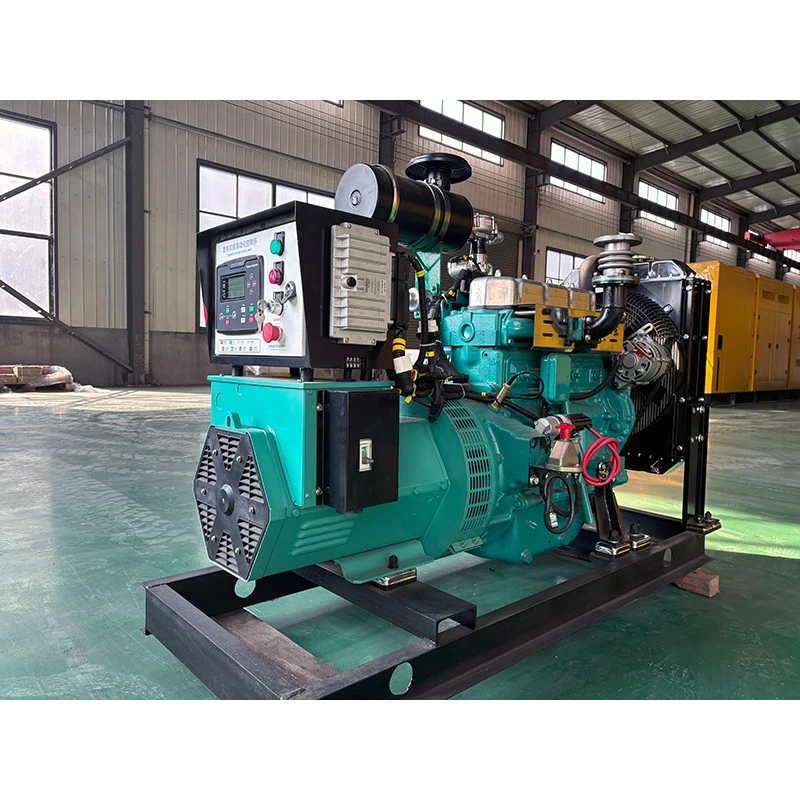
Now, I know I've been talking a lot about biogas generators, but I also want to mention some other types of generator sets we offer. If you're looking for something different, we have Natural Gas Generator Sets and Methanol Gas Generator Sets. Of course, our Biogas Generator Sets are our specialty, and we've got a wide range of models to suit different needs.
If you're in the market for a generator set, whether it's a biogas, natural gas, or methanol gas generator, we're here to help. We can offer you professional advice on the best type of generator for your situation, and we'll work with you to make sure you get the most out of your investment. Don't hesitate to reach out to talk about your procurement needs. We're always happy to have a chat and find the perfect solution for you.
References
Smith, J. (2022). Anaerobic Digestion: Principles and Applications. Green Energy Press.
Jones, A. et al. (2023). "Potential of Rubber Waste as a Feedstock for Biogas Production." Journal of Renewable Energy Research.